

Pre-Conference Sessions and Speakers:
Thursday, March 19, 2026
We’re thrilled to announce our lineup of pre-conference workshops, featuring expert speakers and unique sessions that dive deep into the applications of clinical hypnosis in a variety of clinical settings.
*You will need to create an account on the ASCH portal to register for the workshops. Please find the instructions here. If you already have an account, simply sign in to begin the submission process.
Buy the Pre-Conference Bundle (all 3) here! Member price for the bundle is $350.
Note: You can register for events separately by clicking the links in the descriptions below.

Daniela Huetwohl, M.D., Board Certified Neurologist and Medical Computer Scientist, Certified Medical Hypnotherapist
Session: The Impact of AI Technologies on Patient Communication and Care
Thursday, March 19, 2026 | 10:00 AM – 12:00 PM ET | Member Price: $125.00 | CE: 2.0
Register Here – The Impact of AI Technologies on Patient Communication and Care
This workshop examines how artificial intelligence is reshaping clinical practice for physicians and mental health providers, including its potential to deliver life-saving diagnostic and treatment support while also introducing new uncertainties into clinical communication. We will explore how AI systems enhance efficiency as well as decision-making and how they may influence trust, rapport, and the flow of information between clinician and patient. The session highlights how medical hypnosis and hypnotic communication strategies can support therapeutic presence in technologically mediated settings. Participants will learn how AI tools can assist in developing therapeutic language frameworks and how hypnosis-informed approaches help maintain clarity, empathy, and patient-centered care.
In this workshop, participants will also experience how the development of hypnotic trances can be influenced by AI. We will examine whether the hypnotic structure and linguistic nuances are preserved and how the disclosure of AI assistance affects the therapeutic frame. Participants will have the chance to directly evaluate AI’s impact on communication, rapport, and hypnotic responsiveness in real-world clinical contexts.
At the end of the program, participants will be able to:
- Describe core mechanisms and current evidence for AI technologies—such as Clinical Decision Support Systems (CDSS) and Large Language Models (LLMs)—and identify at least two clinical applications and two profession-specific benefits and risks for mental health and medical practice.
- Analyze how AI systems may affect cognitive, emotional, and subconscious processes in clinicians and patients/clients, and explain at least two ways these effects can influence clinical reasoning, therapeutic dynamics, or patient engagement.
- Identify and discuss at least three ethical and evidence-based strategies for integrating AI into psychotherapeutic and medical care while maintaining clinical judgment, informed consent, and a strong therapeutic or doctor–patient relationship.
- Apply AI-informed communication and clinical interaction skills to case examples in order to enhance patient/client understanding, trust, and overall care experience across healthcare and behavioral health settings.
Presenter: Neurologist and hypnotherapist Dr. Daniela Huetwohl serves as a senior physician in the emergency department and as the Deputy Medical Director of the center for AI, medical informatics and data science at Knappschaft Kliniken University Hospital Bochum. Specializing in medical AI, she aims to refine the healthcare field, balancing digital innovation and human elements. Through AI integration, she aspires to provide clinicians with more time to focus on patients, emphasizing the significant role of medical hypnosis in patient communication during their hospital journey. Her approach reflects the harmonization of emerging technology and the invaluable importance of therapeutic relationships.
Register Here – The Impact of AI Technologies on Patient Communication and Care
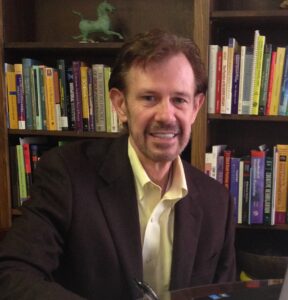
Gary Elkins, PhD, ABPP, ABPH
Session: Mindful Hypnotherapy: The Basics for Clinical Practice
Thursday, March 19, 2026 | 12:15 PM – 3:15 PM ET | Member Price $125.00 | 3.0 CE
Register here – Mindful Hypnotherapy: The Basics for Clinical Practice
Mindful hypnotherapy is an intervention that intentionally uses hypnosis (hypnotic induction and suggestion) to integrate mindfulness for personal or therapeutic benefit. In this workshop, participants will learn about the conceptual basis and theoretical foundations of mindful hypnotherapy and hypnotically oriented interventions in psychotherapy. Research on mindful hypnotherapy will be reviewed as well as applications. Mindful hypnotherapy will be considered in regard to stress and anxiety management. Hypnotherapy presents an intriguing synchronicity with some aspects of mindfulness, in that both practices involve focused attention, experiencing the world differently, and relaxation. A combination of lecture, case examples, and experiential practice will be utilized to meet learning objectives in the workshop.
At the end of the program, participants will be able to:
- Describe at least 1 core concept related to mindful hypnotherapy
- Discuss the relationship between mindfulness and hypnosis.
- Identify 1 mindful hypnosis intervention from an eight-step mindful hypnotherapy protocol.
- Discuss at least 1 hypnotic suggestion based upon mindful hypnotherapy concepts for anxiety and stress reduction.
- Identify at least 1 advantage of mindful hypnotherapy versus mindfulness alone.
Presenter: Gary Elkins, Ph.D., professor of psychology and neuroscience, directs the Mind-Body Medicine Research Laboratory at Baylor University where he conducts research into hypnosis for stress and mindfulness, sleep, trauma, smoking cessation, and hot flashes. Based upon his research and publications, Dr. Elkins is the leading researcher and expert on hypnosis for hot flashes and sleep disturbances as well as other clinical applications. His research into hypnosis interventions has been funded by NIH grants for over 25 years. Dr. Elkins has over 100 publications which include the books: Mindful Hypnotherapy: The Basics for Clinical Practice; and the Handbook of Medical and Psychological Hypnosis. His latest book, Hypnosis and Hypnotherapy: What you Need to Know provides a research evidence-based understanding of hypnotherapy. In recognition of his research, Dr. Elkins has received major awards from the Society for Clinical and Experimental Hypnosis, American Society for Clinical Hypnosis, and the Distinguished Contribution to Science Award from Division 30 of the American Psychological Association.
Register here – Mindful Hypnotherapy: The Basics for Clinical Practice

Ronald A. Alexander, PhD
Explorations in Trauma Treatment Through Ericksonian Hypnosis, Mindfulness, and Core Creativity
Thursday, March 19, 2026 | 3:30 PM – 6:30 PM ET | Member Price $125.00 | 3.0 CE
Register Here – Explorations in Trauma Treatment Through Ericksonian Hypnosis, Mindfulness, and Core Creativity
The work of Milton Erickson brought new insights and methodologies to the field of hypnosis and mind-body healing. Erickson’s therapeutic use of rapid and deep induction that integrated storytelling, metaphors, and deep trance to engage the patient’s unconscious mind towards healing was a pioneering contribution to this new paradigm of thought. Therefore, within this new view, affective experience has taken on an entirely new meaning, one in which symptoms are now seen as the body’s wisdom pathways for creating communication between the unconscious and the self for promoting healing.
For 2500 years, Buddhist meditation practices have developed what is referred to as “skillful methods” for the study and transformation of the mind-body process. These meditation and visualization practices help to cultivate self-regulation through awareness training to develop concentration, release painful affects, and apply the principles of Buddhist psychology to resolve afflictive factors of mind-body trauma.
This workshop will address solutions for treating trauma by utilizing Ericksonian Hypnosis, Buddhist Mindfulness, and Core Creativity. We will review the clinical skills of tracking, pacing, and utilization of the symptom as the pathway for accessing the creative unconscious with trance for the rapid treatment of trauma. The workshop will highlight Milton Erickson’s use of storytelling, metaphor, and rapid trance induction as well as the use of framing, re-framing, and de-framing for the immediate reorganization of transforming somatic-affective experience into new healing rhythms in the body. Through trance exercises, participants will learn how to access their core creativity to help their clients visualize a path forward into the future after experiencing trauma.
At the conclusion of this program, participants will be able to:
- Demonstrate more creative and resourceful skills when treating body symptoms, trauma, pain, mood, and somatic disorders.
- Utilize the symptom to access the unconscious and its healing inner resources with deep trance, visualization, and mindfulness meditation.
- Apply experiential exercises to help clients integrate their body-mind and access their core creativity, enabling them to move forward into the future after experiencing trauma.
- Utilize new clinical skills for tracking, pacing, and reframing trauma into new learnings for healing and resolution
Presenter: Ronald A. Alexander, PhD, MFT, SEP (Somatic Experiencing Practitioner) is a psychotherapist, leadership coach, and international trainer in the fields of Mindfulness Meditation, Ericksonian Mind-Body Therapies, Core Creativity, Gestalt Therapy, and Somatic Experiencing. He is the Executive Director of the OpenMind® Training Program, which offers personal and professional training programs in mindfulness-based mind-body therapies, transformational leadership, and meditation. He received consultation and treatment from Milton H Erickson MD. He personally trained with Ernest Rossi, PhD, and Steven Gilligan PhD in Ericksonian Hypnotherapy, and Daniel P. Brown of Harvard Medical in hypnosis and hypno-analysis. He is the author of Core Creativity: The Mindful Way to Unlock Your Creative Self, and Wise Mind, Open Mind: Finding Purpose and Meaning in Times of Crisis, Loss, and Change. Learn more at www.CoreCreativity.com
Register Here – Explorations in Trauma Treatment Through Ericksonian Hypnosis, Mindfulness, and Core Creativity